TIDAL Material Studies
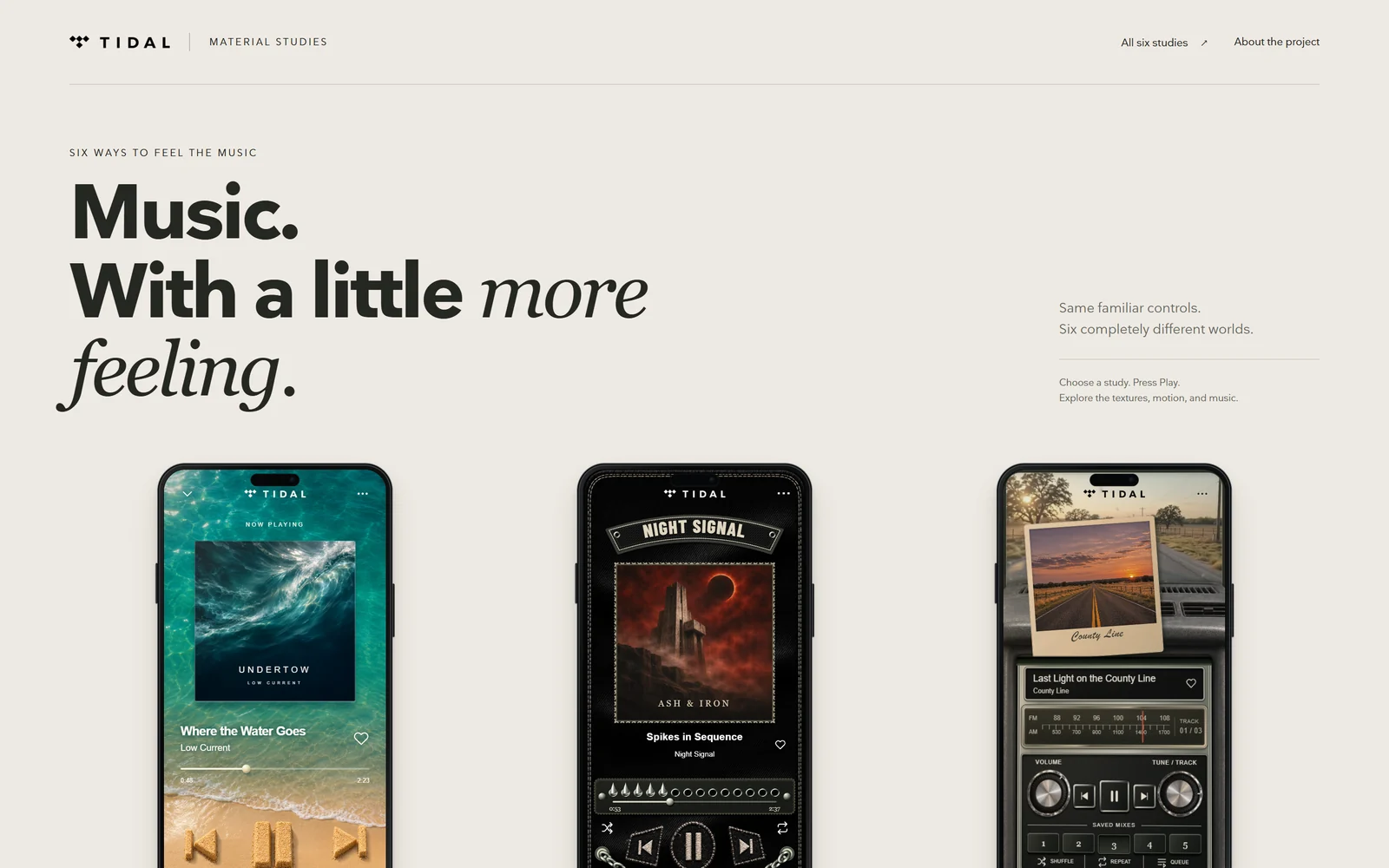
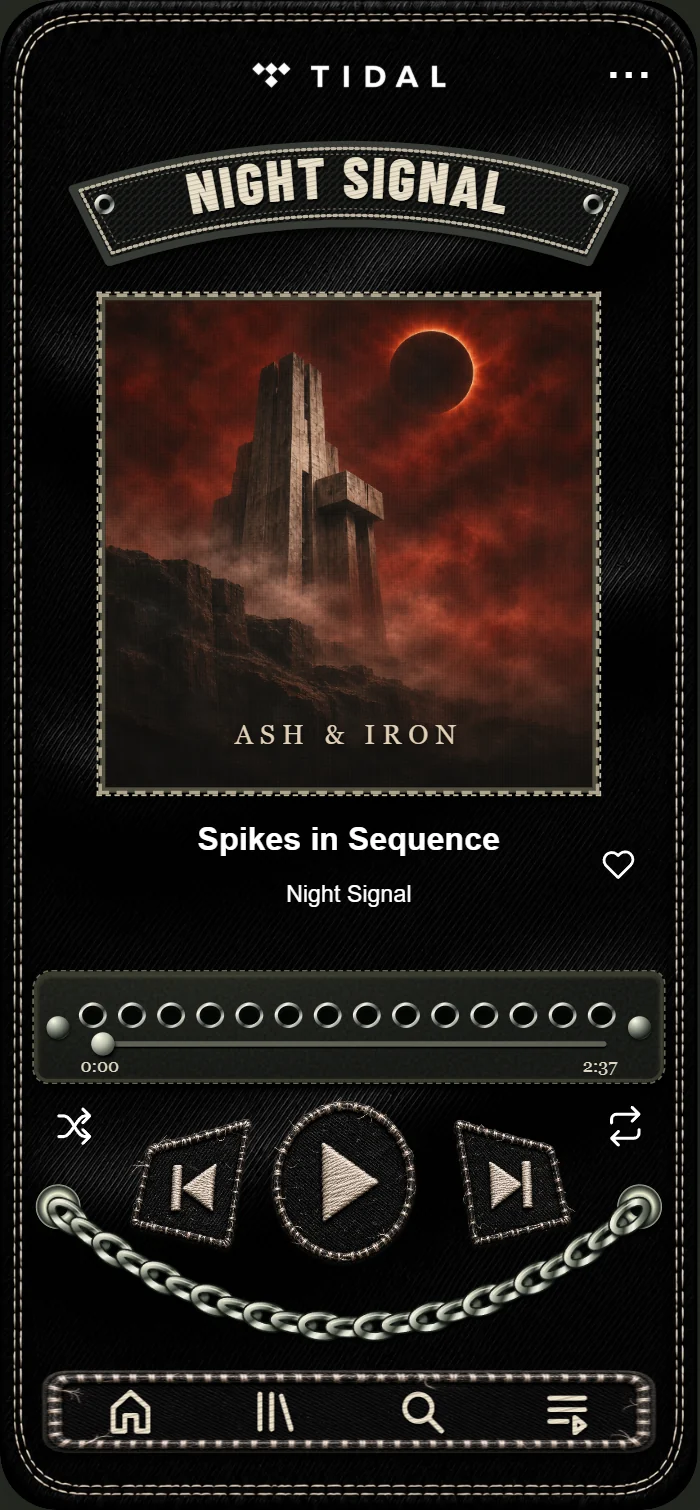
Custom skins for the TIDAL player. Music is about feeling, so these six playable concepts keep the controls everyone knows and change the material to match the mood, from ocean and sand to a denim battle vest.
- Type
- Independent design exploration
- Brand
- TIDAL. Not an official TIDAL product
- Question
- What if your player felt like your music?
- My role
- Concept, art direction, interaction design
- With
- AI for the build and placeholder songs; Claude Code for the portfolio integration
- Status
- Six playable prototypes
We don’t pick songs. We pick a feeling.
People reach for music by mood: something to focus to, something for energy at the gym, something for a slow drive home. Yet the player looks the same every time: flat artwork, a scrubber, five buttons.
That simplicity has a purpose. It’s easy to use, and people find what they need. But music gives an interface room to be more fun and more organic than that. So this project is about UI, not music: what if the player felt like the music you put on?
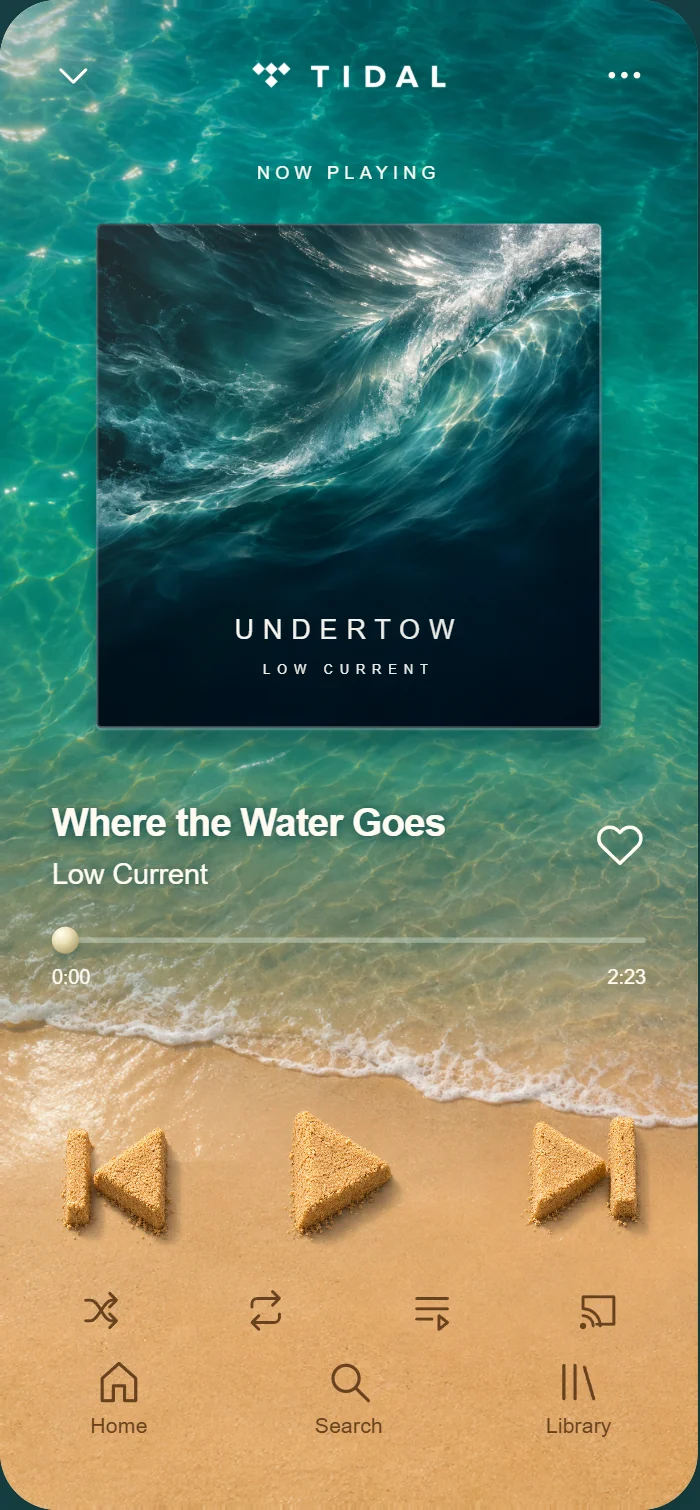
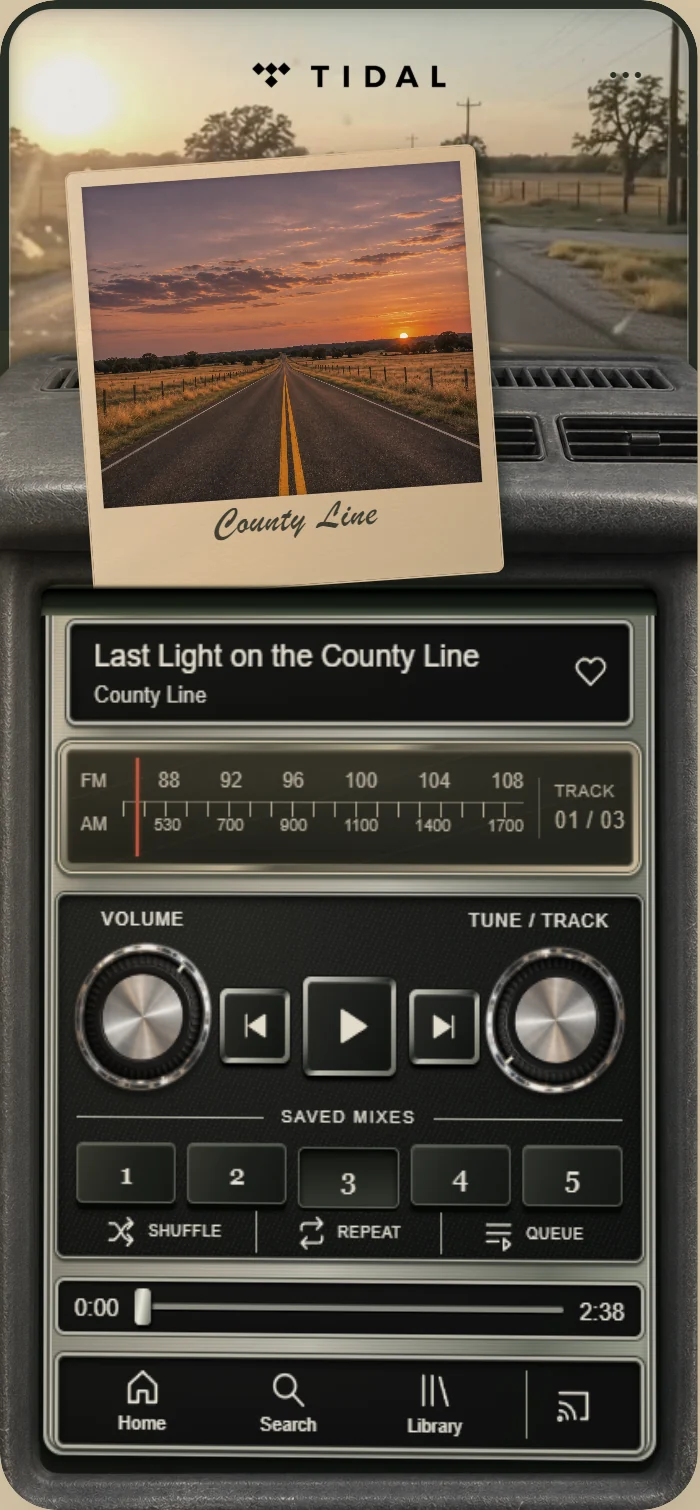
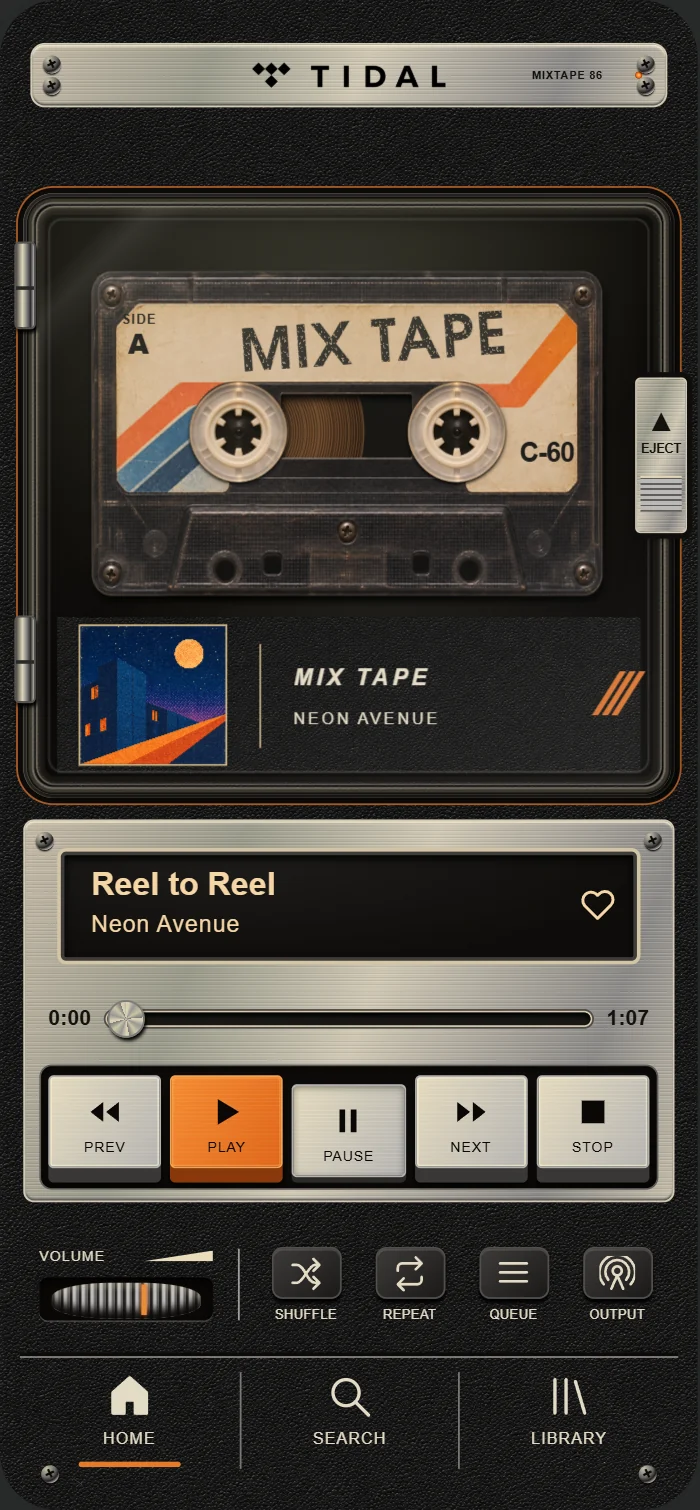
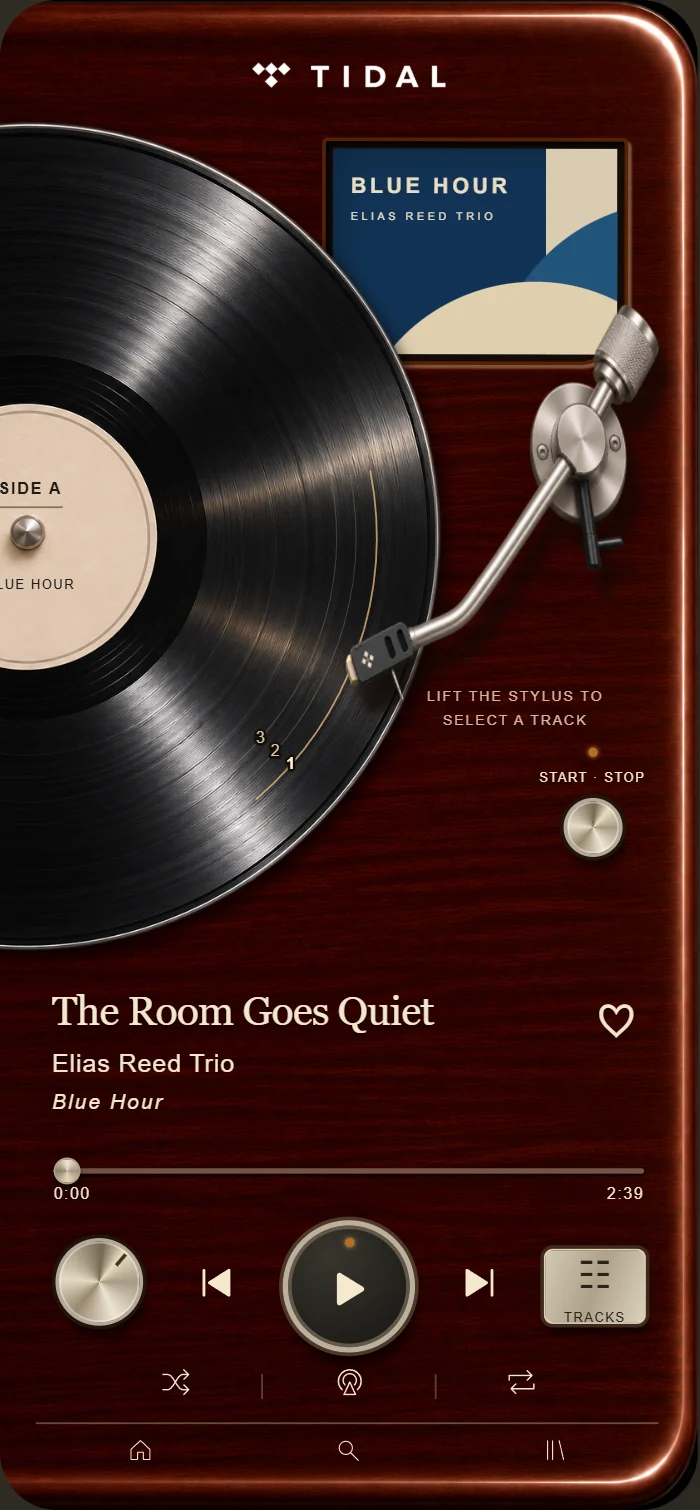
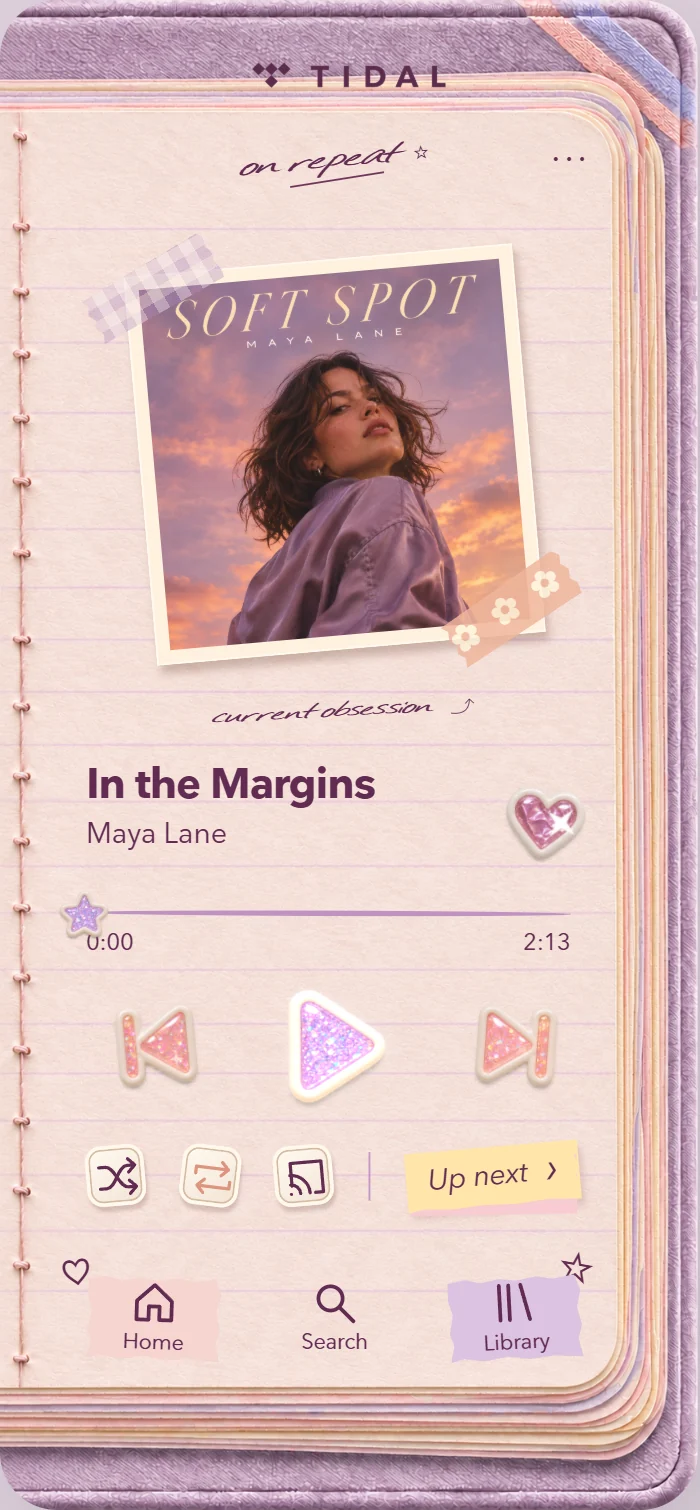
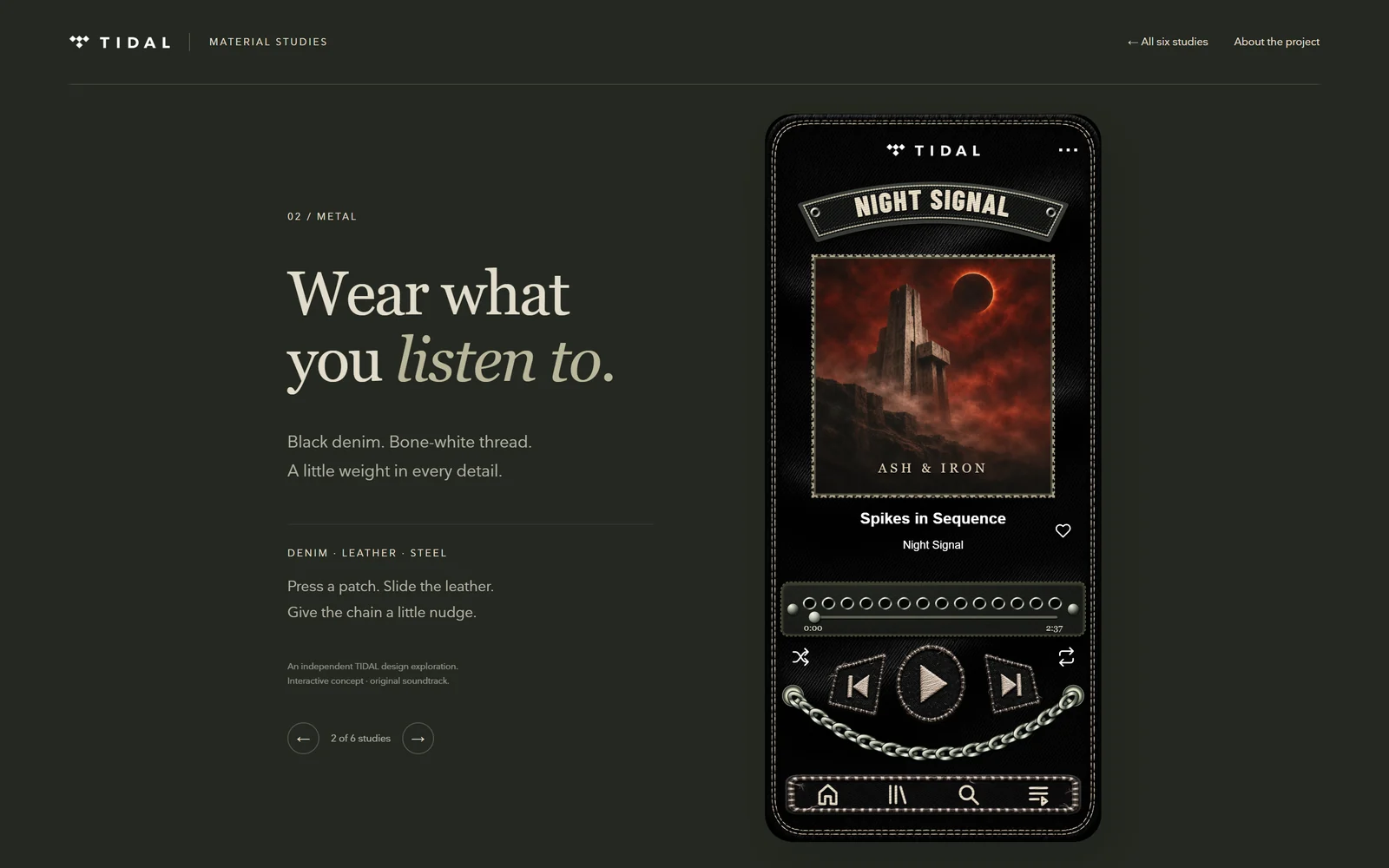
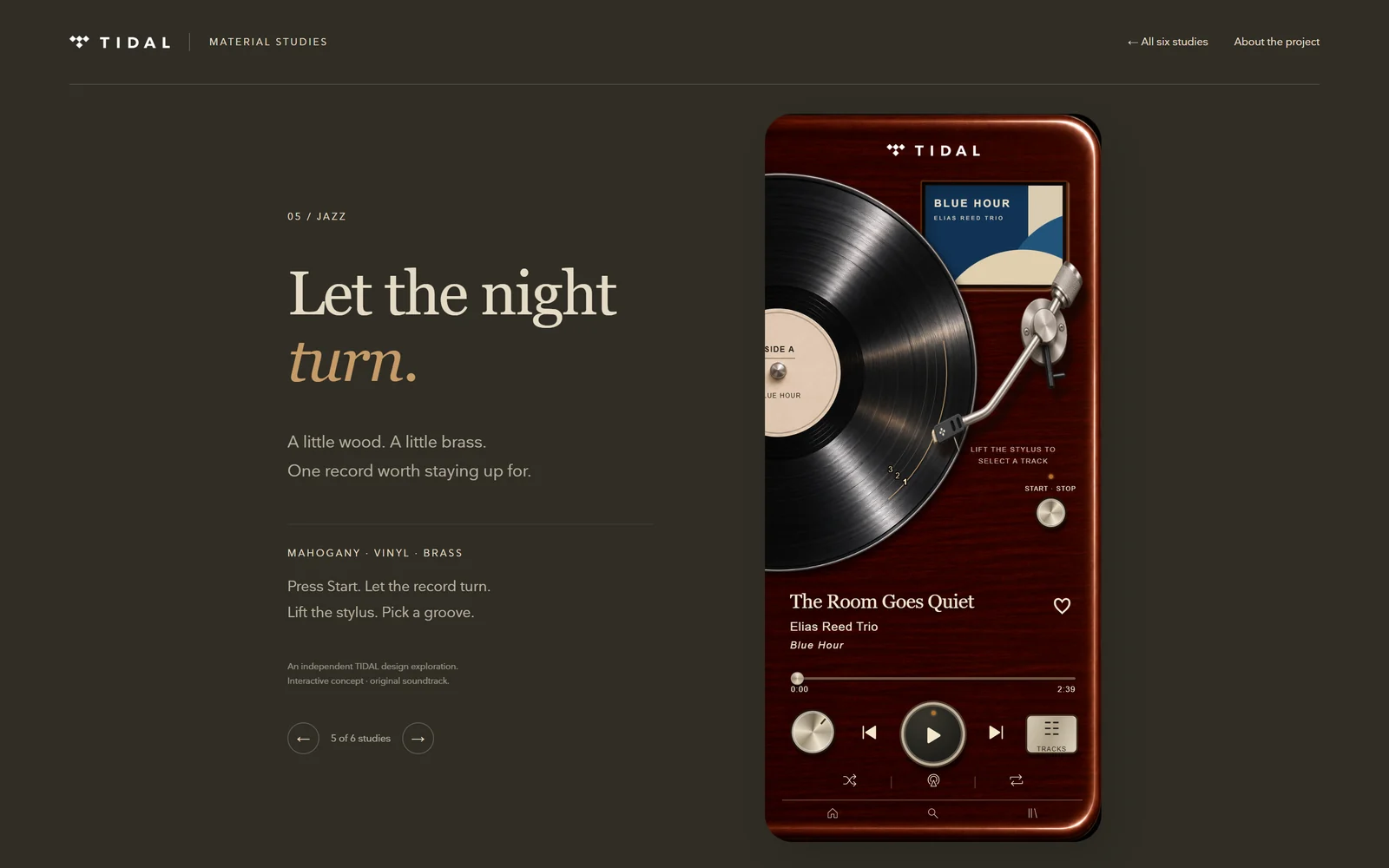
The rule for every study was simple. Keep play, pause, skip, seek, shuffle and repeat exactly where people expect them. Then let the material carry the mood: water and sand, denim and steel, a dashboard radio, cassette reels, a turntable, a paper journal.
Skins are coming back
Anyone who skinned Winamp remembers how good it felt to make a music player your own. I think that kind of personalization is due for a revival. People want something unique and a little fun, and music is the right place for it.
You wouldn’t do this for a bank app or a shopping cart. For a music service it makes complete sense. Custom skins are an opening for TIDAL to set itself apart from the competition and give people something to get excited about.
Who did what
- I originated
- The concept, the six genre and material pairings, and the art direction for every player, texture and page.
- I designed
- The interactions for each world, the gallery and detail page layout, and the final refinements, from corner radii to the journal’s handwriting sizes.
- AI contributed
- Code for the players under my direction, imagery and textures, and placeholder songs so the prototypes could actually play. Claude Code integrated the finished studies into this site.
- What reached people
- The six playable studies, published here.
Six worlds, one ritual
Each player is its own small world, with its own native gesture. You drag a pearl through the foam, nudge a chain, turn a radio dial, eject a tape, lift a stylus, or press a glitter sticker. Choose one to open it and it starts playing.
The calls that made it feel finished
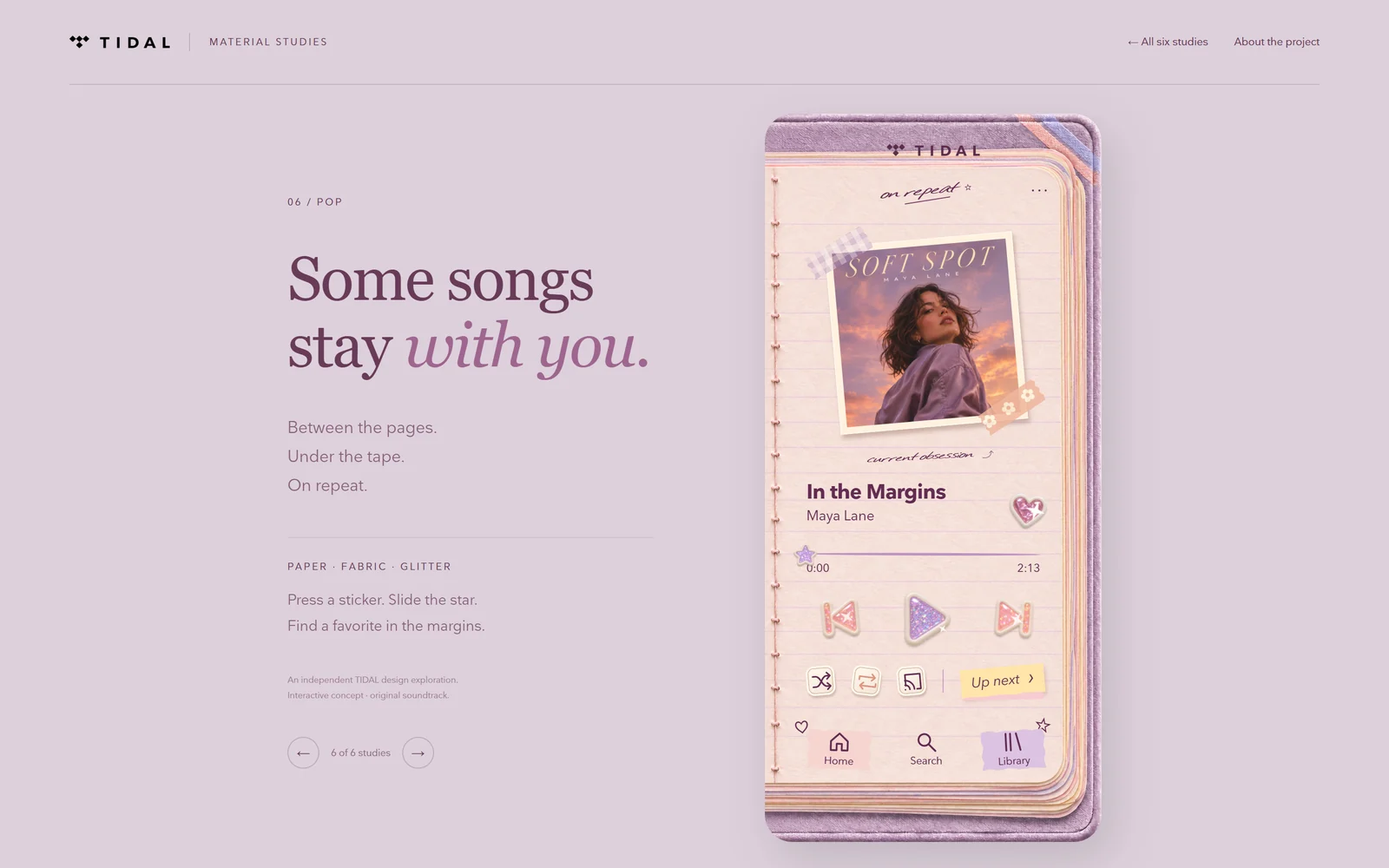
Most of the work was editing. I took things out: the page curl and bookmark ribbon on the journal, a lyrics panel that competed with the player, the fake phone system bars. AI helped build it, but the idea and every one of these calls were human ones.
Then I tuned the details that make a material believable. The journal’s handwriting dropped to half its first size so it sits on the paper like real notes. The metal shuffle and repeat controls rose above the chain so they read as hardware. Every logo shares one width so six very different worlds still feel like one brand.
An Easter egg in the songs
A player prototype needs something to play, so I made placeholder songs with AI, three per world. They’re there to make the interface usable, and to have a little fun: every song is about the player it lives in. The metal track tells you to drag the chain across the screen. The jazz one is called “Put the Needle There.” The country song asks you to find it on the dial.
The gallery previews move silently. Open a study and it starts playing. Favorites save in your browser.
Microsoft