Wrought &
Written
My own apparel brand. Blackletter, heavy metal, stoicism, and gym culture, taken from lettering experiments to a launched website and storefront.
- Type
- Personal venture
- Audience
- Lifters and metalheads who like their convictions worn
- Objective
- Build a brand that can earn beyond project fees
- My role
- Founder, creative director, designer
- With
- Ideogram, ChatGPT, Google Flow, Claude Code; Shopify, Printful, ApparelHub
- Status
- Launched. Sales and paid media to come
Artwork made to be worn
Wrought & Written started as an AI exploration and a question: could I build a brand of my own, not just for clients, and could it become a source of income beyond project fees?
The aesthetic sits where blackletter, heavy metal, stoic philosophy, and gym culture overlap. Every shirt carries a line meant to be lived, set in lettering heavy enough to earn it.
It developed in stretches over more than a year. The final site came together much faster, because by then the assets and the lessons were already in hand.
Who did what
- I originated
- The brand, its point of view, the phrase selection, and the art direction for everything. Some wording comes from existing books and quotations.
- I designed
- The repeatable lettering aesthetic, Illustrator vector preparation, Photoshop garment composites, and the site’s direction and copy edit.
- AI contributed
- Lettering generated in Ideogram under my direction; characters and apparel imagery; video animated in Google Flow from frames I prepared; the visual site design in ChatGPT; integration and publishing with Claude and Claude Code.
- Partners
- Shopify for checkout, Printful for print-on-demand fulfillment, and ApparelHub for the platform connections.
- What reached people
- A live website and storefront at wroughtandwritten.com.
A lettering voice you can repeat
I explored custom lettering in Ideogram with visual references and selected phrases, over roughly 15 to 20 hours across many sessions. The goal wasn’t one great piece. It was a consistent hand that could carry a whole collection, then survive vector preparation for print.
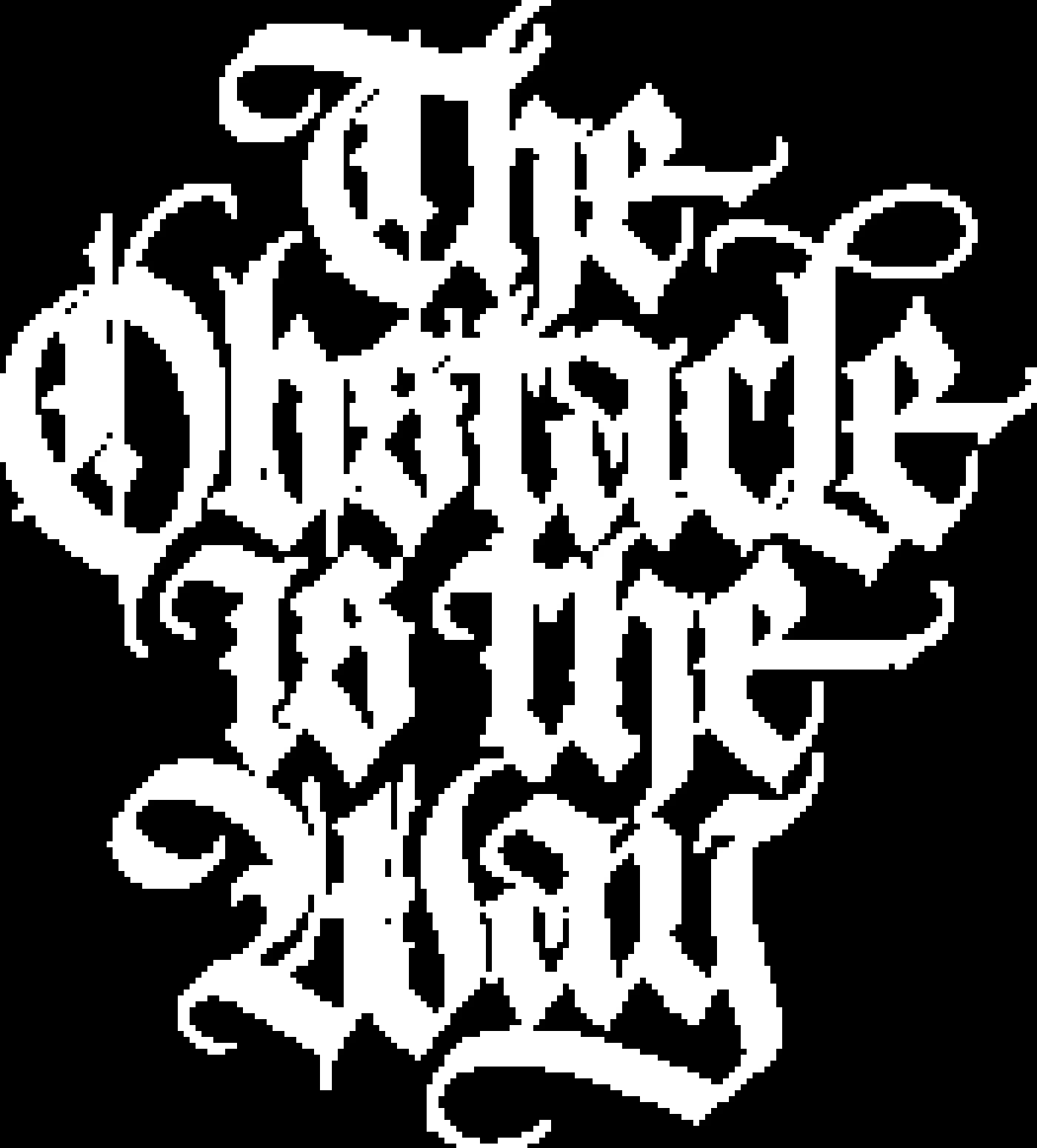
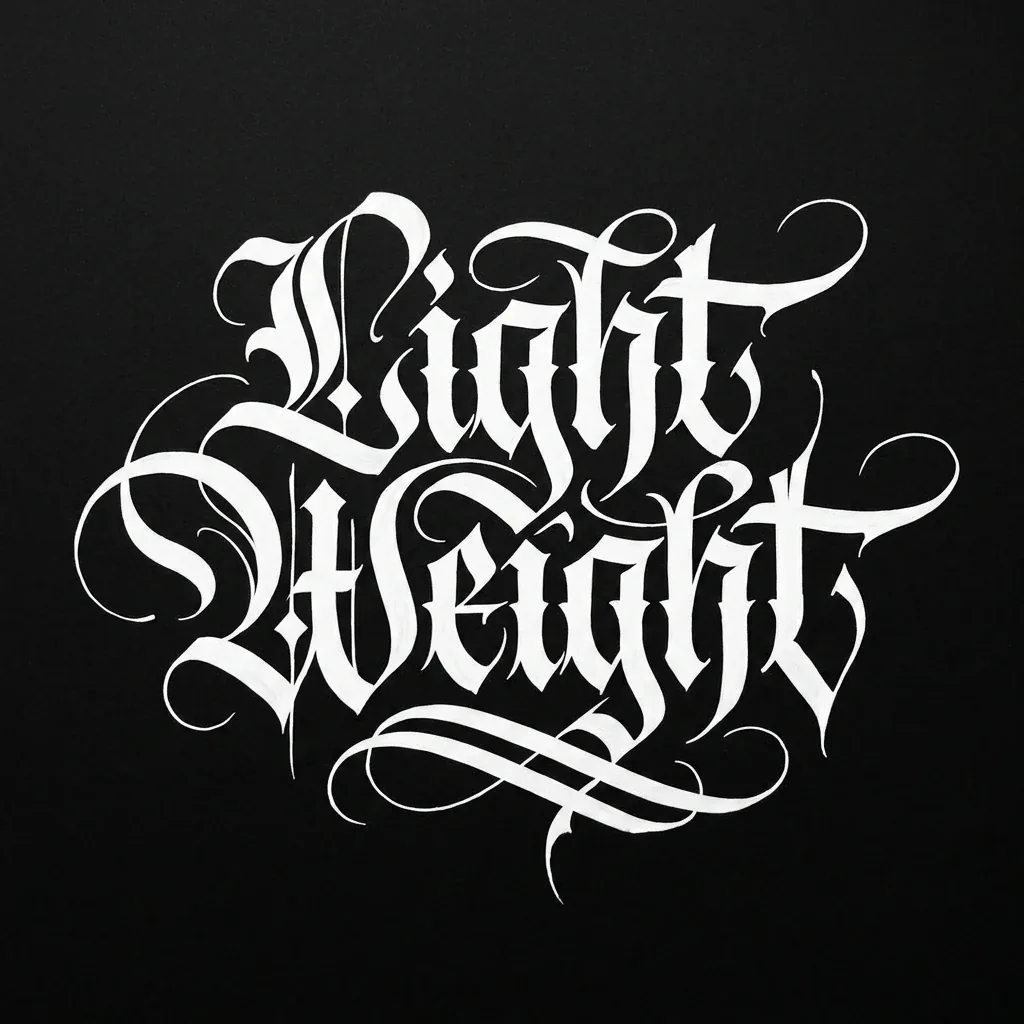
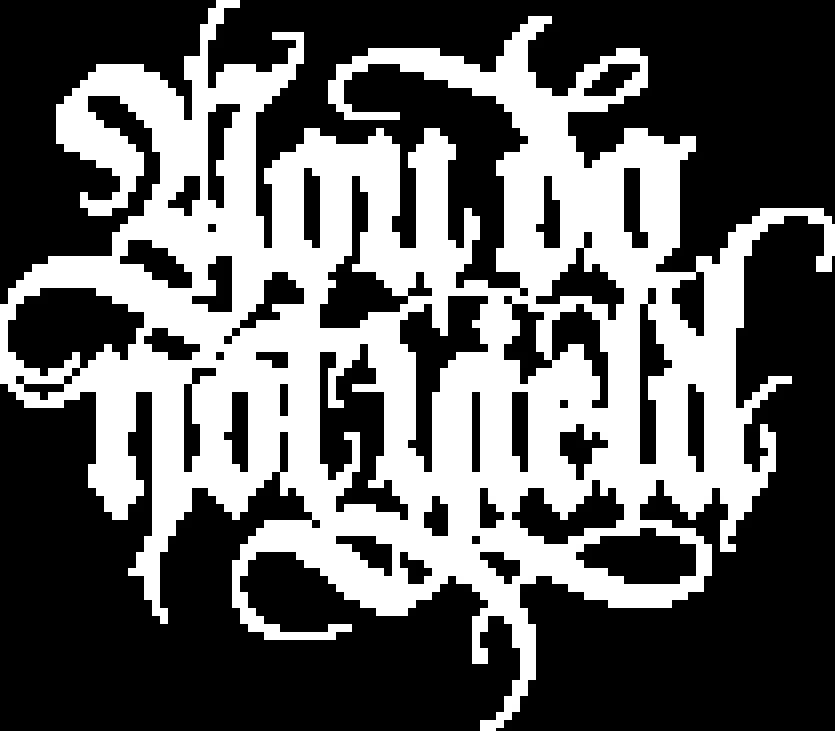
When the AI dropped the lettering
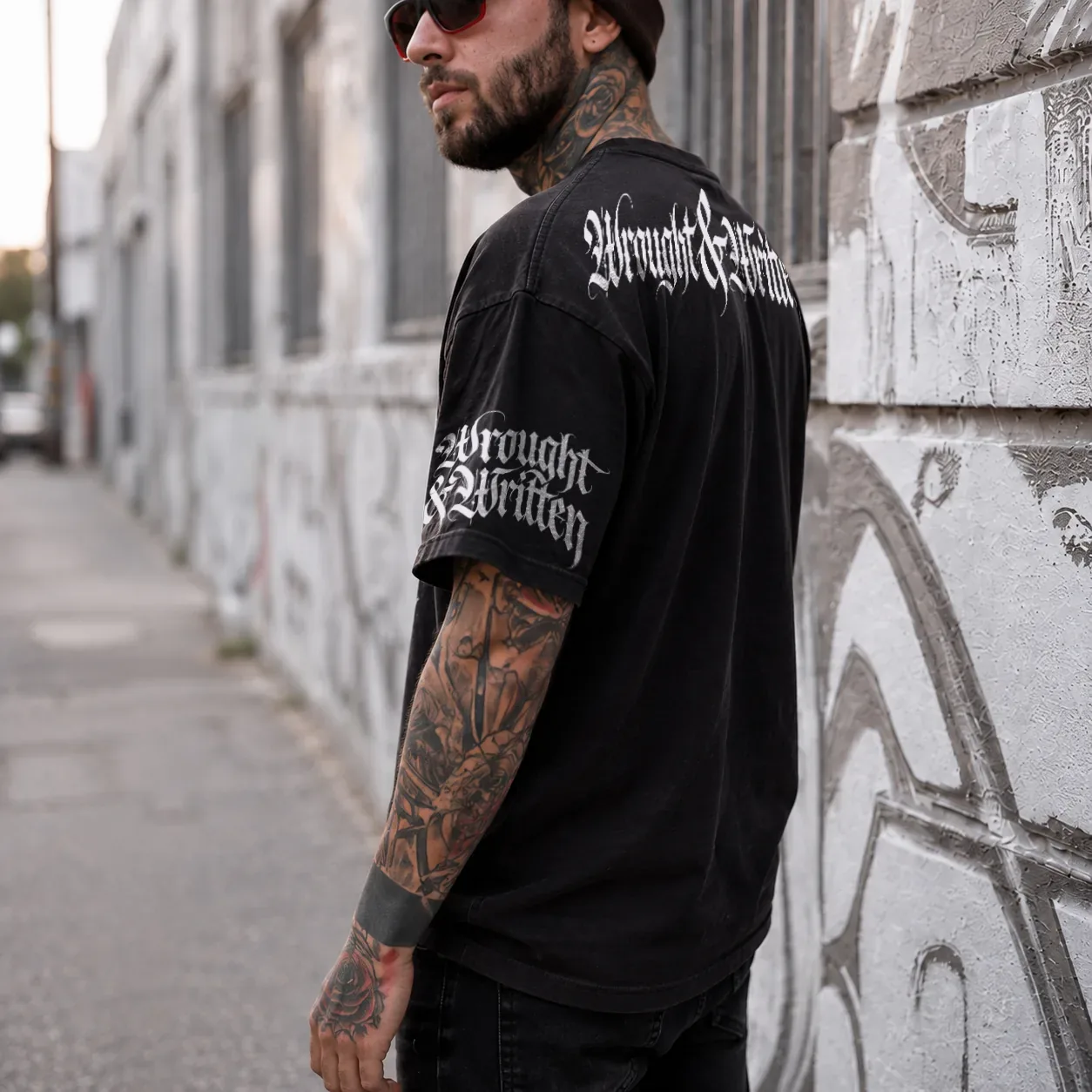
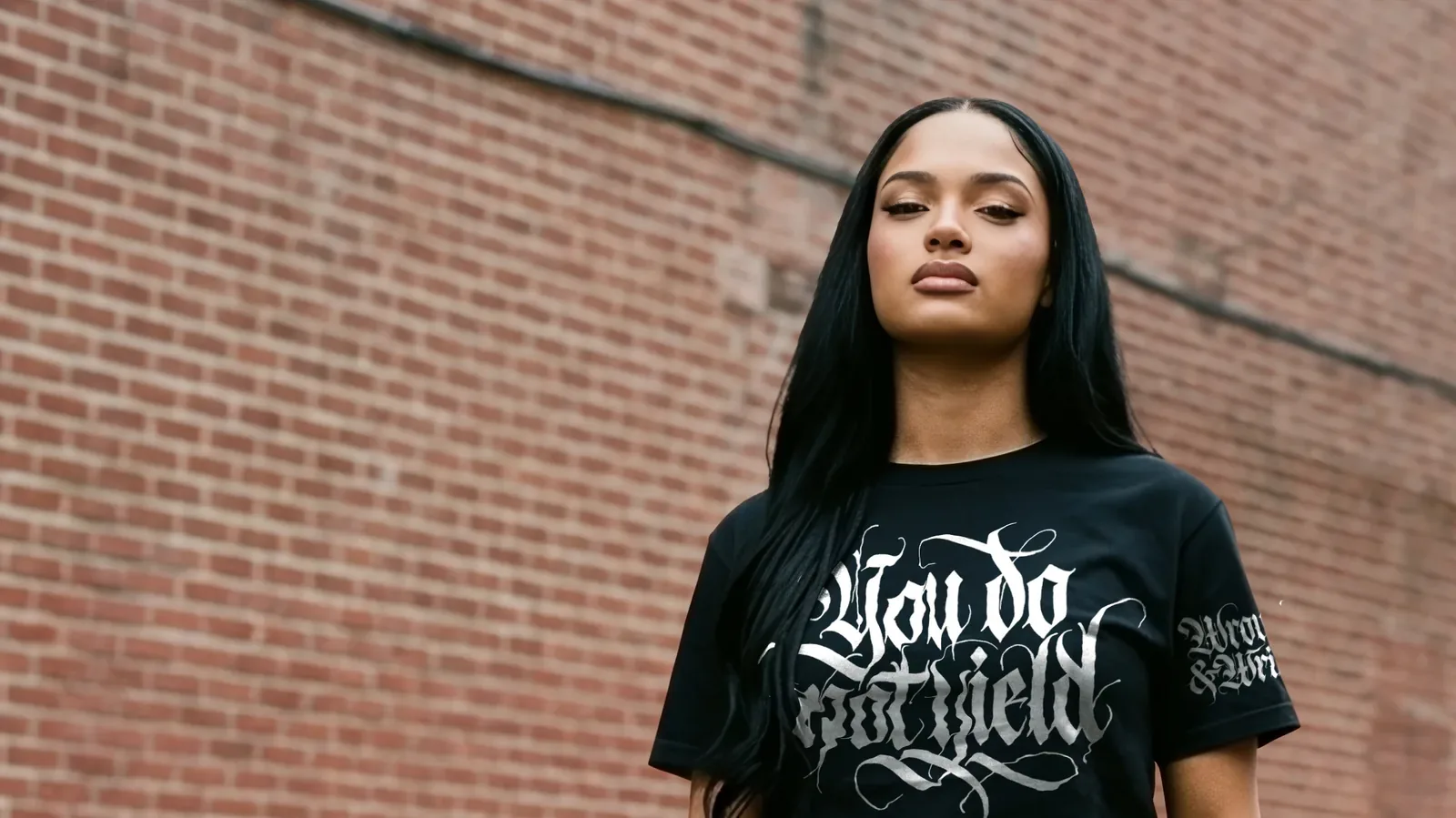
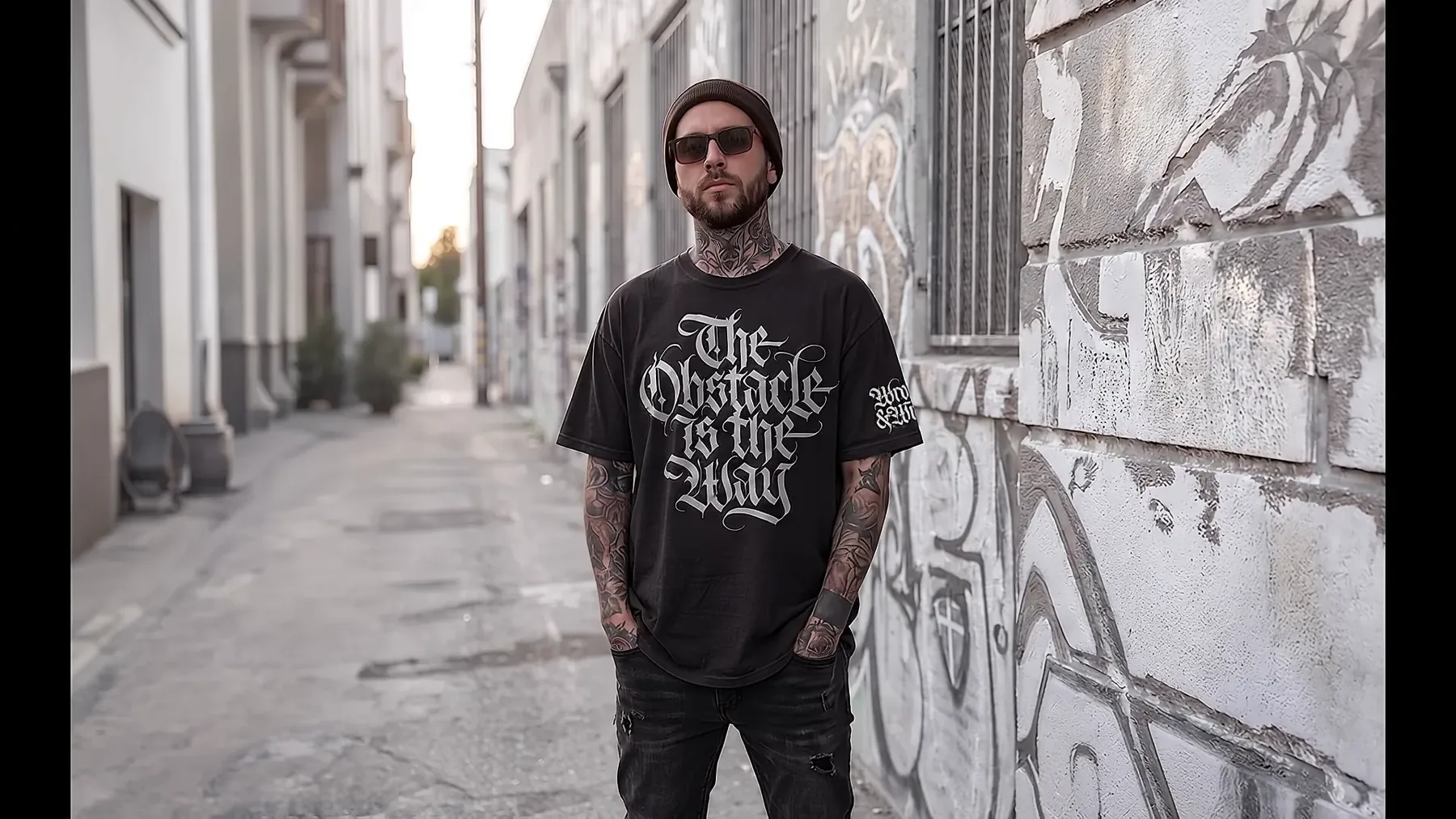
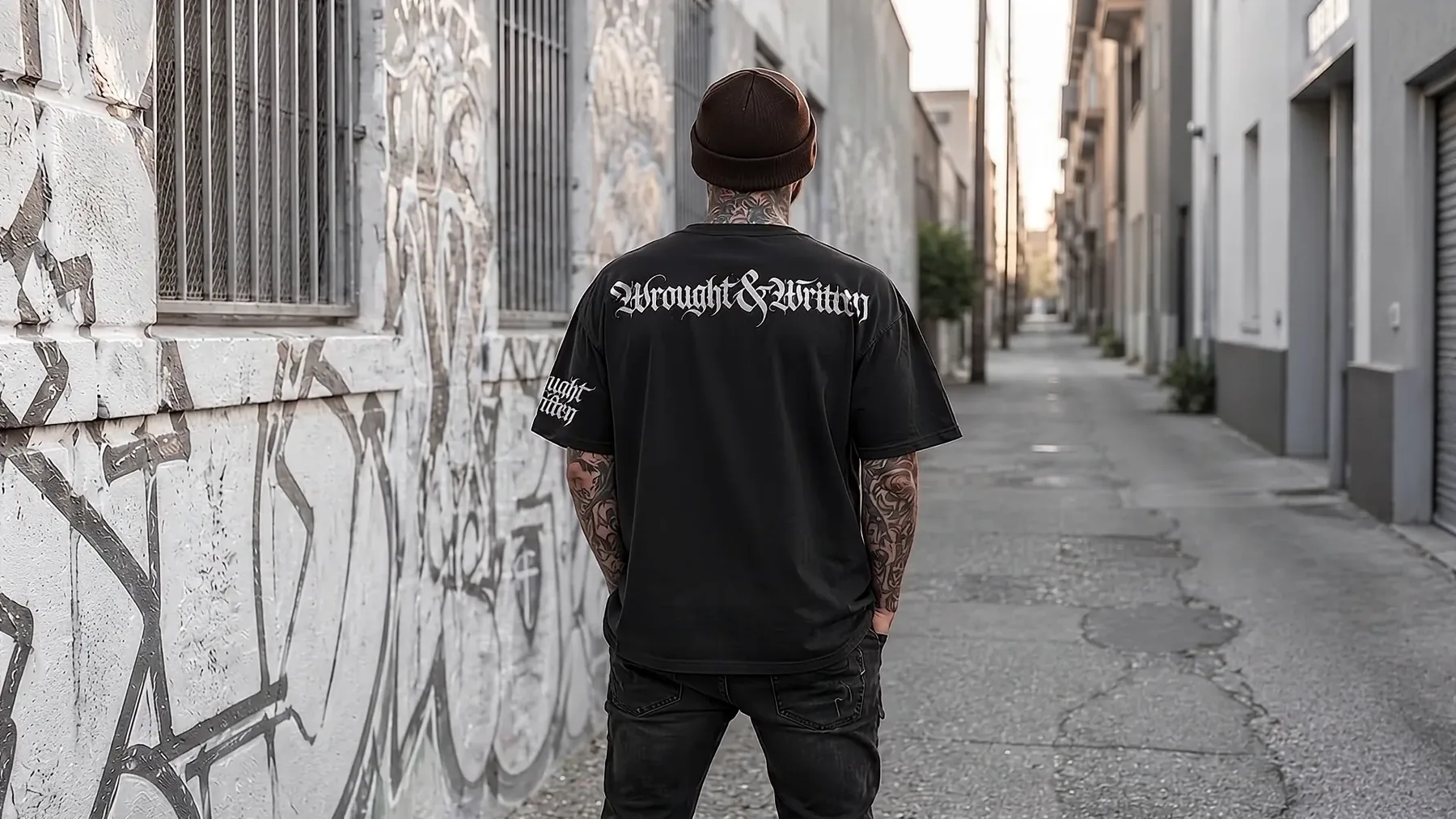
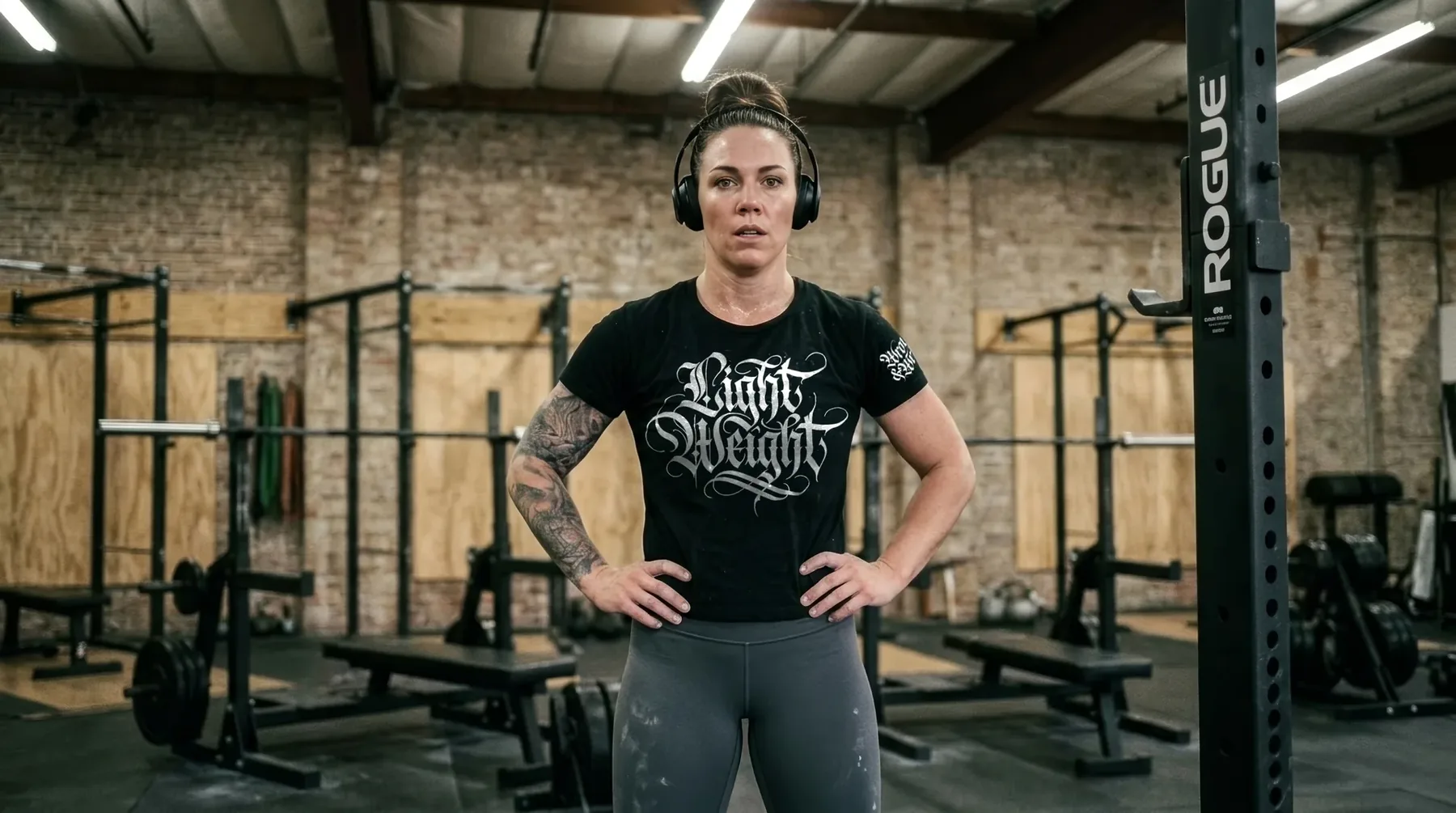
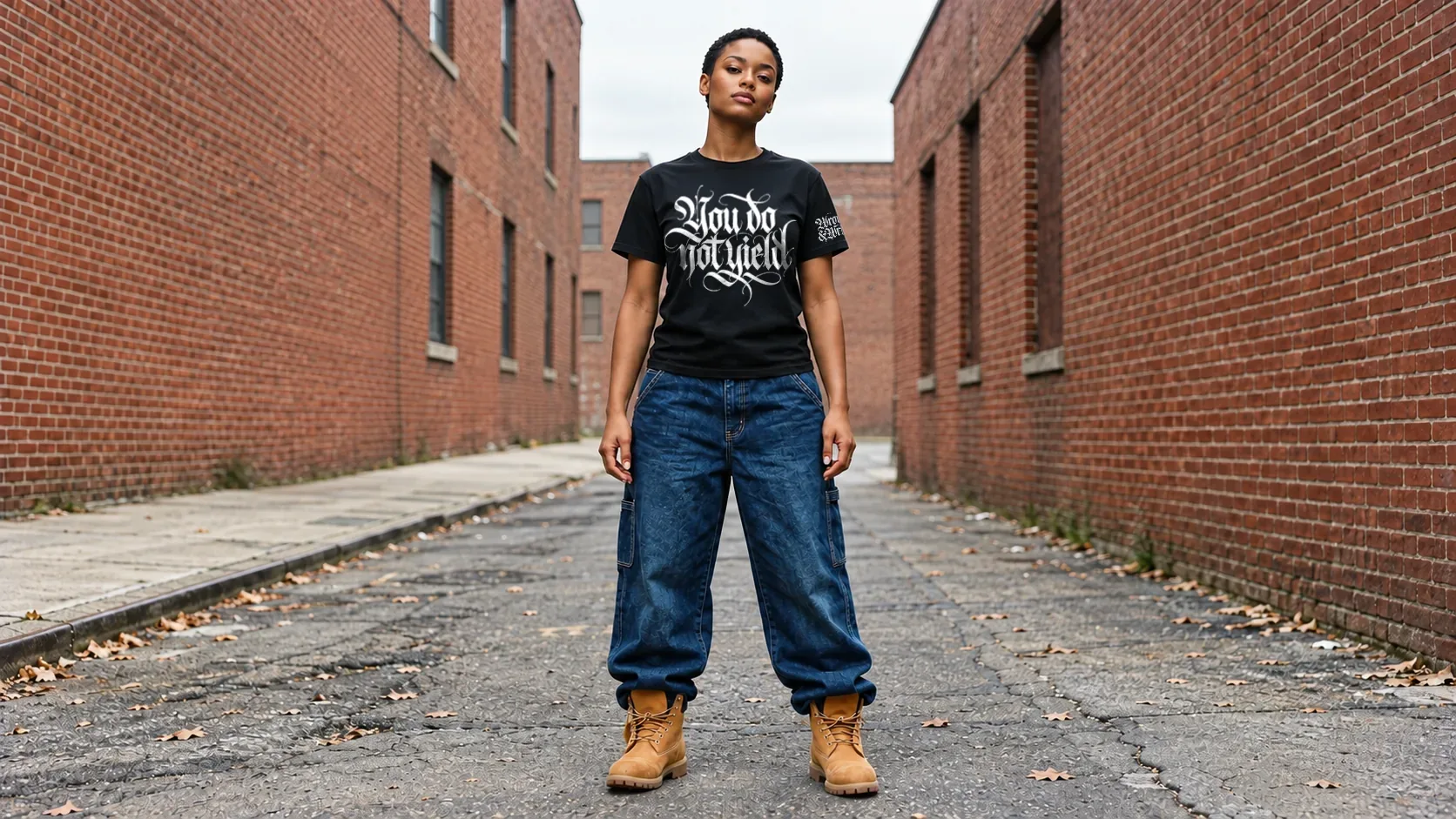
I directed the generated characters down to wardrobe and glasses. But AI couldn’t keep blackletter intact on fabric; the letterforms melted. So I took the garments into Photoshop and composited the real artwork with smart objects and displacement maps, letting each word fold and stretch with the shirt.
For motion, I prepared start and end frames and animated them in Google Flow, using ChatGPT to develop prompts and refining through rounds of experiments. The site needed video the visitor scrubs by scrolling, so every clip was built with that in mind.
Briefing AI like an art director
The first builds came from detailed wireframes. That made the AI a production artist following instructions. I got better results once I changed roles: set the vision and requirements, hand over the assets, let it propose, then judge and refine.
The final visual design came from ChatGPT under that direction, with Claude and Claude Code handling much of the integration and publishing. It took about two to five hours, standing on everything learned before it.
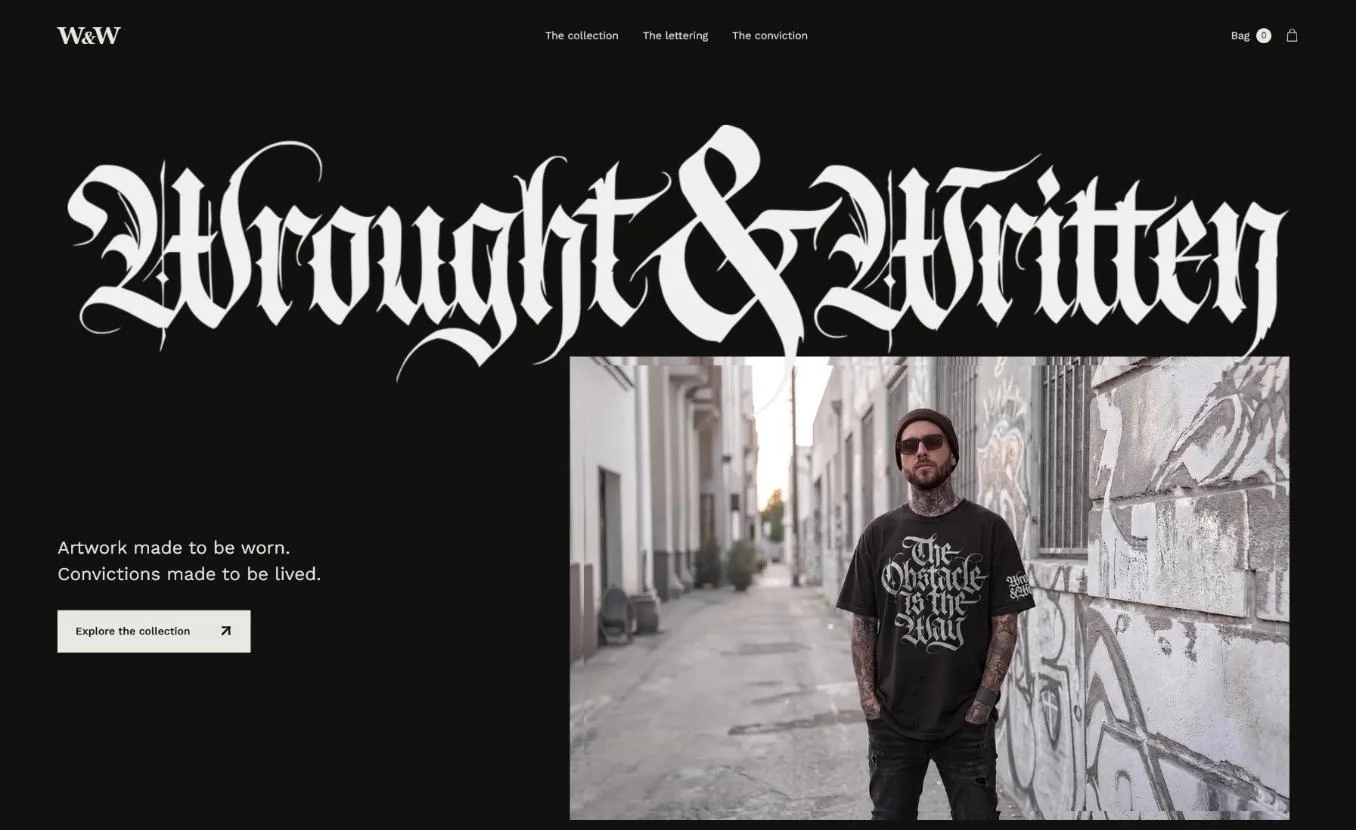
One proposal surprised me and stayed: a black masthead with copy in one third and video in two, which expands toward full frame as you scroll. I also cut a lot of copy, which helped the voice and the focus at the same time.
Launch, then learn
This was my first Shopify build, set up with AI guidance in about eight to ten hours. Printful handles print-on-demand fulfillment, and ApparelHub connects the platforms.
I chose to launch rather than keep polishing, so the brand could start reaching people. Early feedback from friends, family, and creative peers has been strong. Paid media and sales results will be a later update; I won’t claim either before the numbers exist.
TIDAL Material Studies